Full Guide For Hue In-Wall Solutions
Philips Hue offers four in-wall products designed to give you flexible, intelligent control over your lighting setup. While they might look similar, each one works differently depending on the type of lights you have and the wiring available in your home.
This guide explains all four products, compares them, and gives you the installation, compatibility, and troubleshooting details you need.
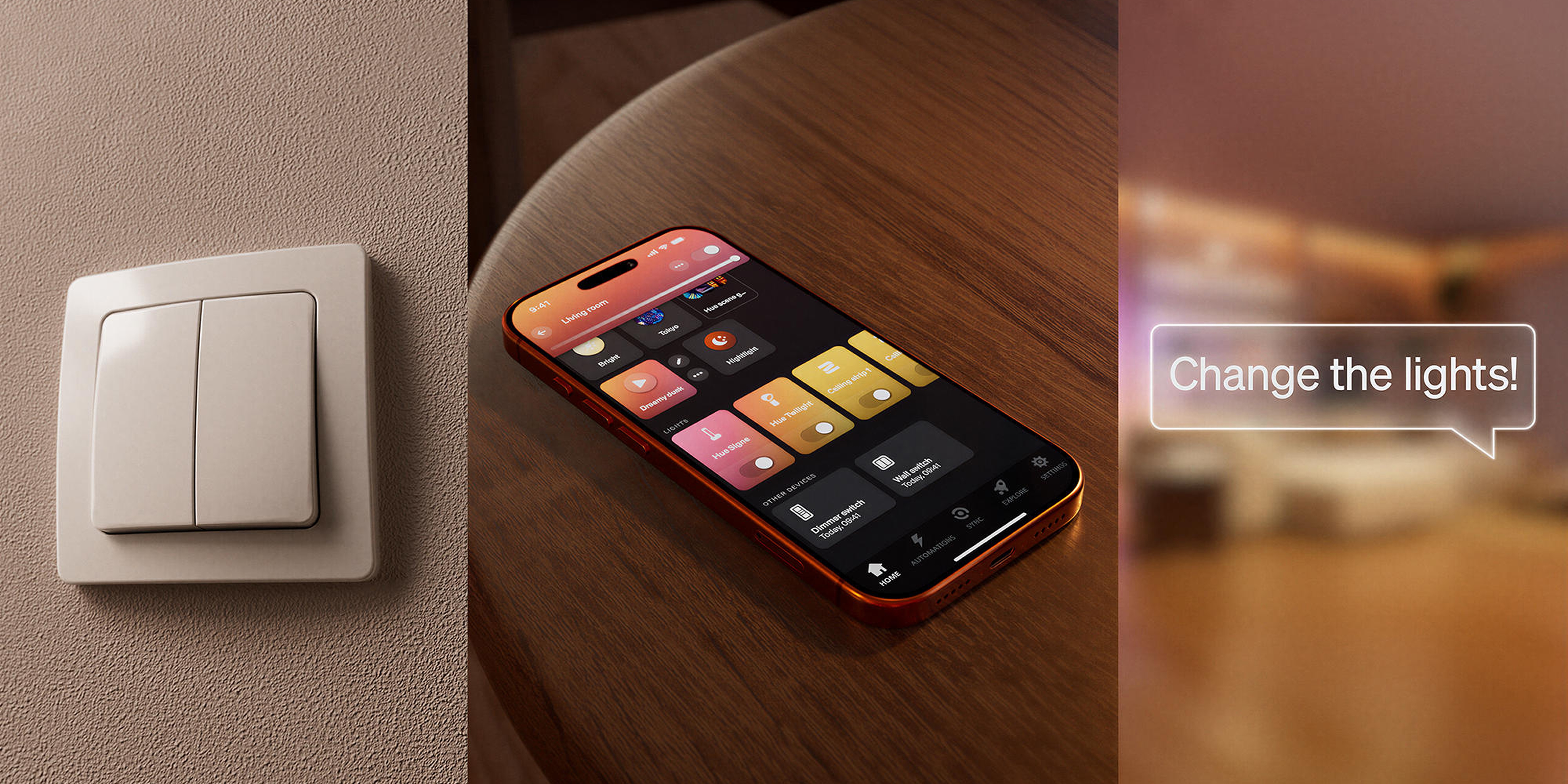
1. Smart light modules (Two versions)
These modules work with Philips Hue and other Zigbee smart lights and allow you to control them with your existing wall switch without cutting power to the bulbs.
1A. Wired wall switch module (Wired version)
Keep your Hue lights reachable. Make your existing wall switch smart so it can control Hue lighting scenes, Rooms/Zones, and automations while keeping power to the smart bulbs at all times.
Key Features
- Works with Hue and other compatible Zigbee smart lights
- Requires a Hue Bridge
- Works with rocker, toggle, and push-button switches
- Install once, no need to replace the battery
- Requires a neutral wire
Compatibility Notes
Not compatible with:
- Existing rotary dimmers
- Combined outlet/light switch plates
- Non-smart lights
Installation Highlights
- Requires wiring into your wall box:
o 1-2x Load wire (depends if single or dual button switch)
o Neutral wire
o 2x Line wire
- Push-in 5-terminal connector included in the box to keep mains connected
The suitable wire size and strip length for the splicing connector provided:
Conductor cross section: solid: 0,75 to 4 mm²
Conductor stripped length: 11 mm
- Follow onboarding in the Hue app
1B. Battery-powered wall switch module (Battery Version)
Provides the same smart light control benefits as the wired version without requiring a neutral wire.
Key Features
- Battery powered (no wiring required), battery type CR2450
- Works with Hue and other Zigbee smart lights
- Requires a Hue Bridge
- Battery life: at least 5 years (low battery alert shown in Hue app)
Compatibility Notes
- Works with rocker, toggle, and push-button switches
- Not compatible with switches with built-in dimmers or combined outlet/switch plates
- Works with 2way/3way switch setups (if the other switches are also connected to modules)
Installation Highlights
- Neutral wiring is not needed (compatible with the wiring that you have in your wall)
- Always turn off the circuit breaker before any electrical work, including removing the switch
- Use the supplied push-in connector to maintain power to the smart bulbs
- Do not extend the included wires
- The module may blink if wires touch during installation — this is normal
- Complete physical installation before adding it in the Hue app
2. Wired switch (two versions On/Off or Dimmer) – for non-smart lights
A product designed for traditional light bulbs, turning them into controllable smart lights in the Hue ecosystem.
Adds smart on/off or dimming control to non-smart lights.
Key Features
- On/Off version → for non-dimmable lights
- Dimmer version → for dimmable lights
- Bluetooth support (limited)
- Matter compatible (as a light)
- Available in 1-or 2-channel versions (on/off only):
1 channel is to control one group of lights (single switch), while 2 channel is to control 2 groups of lights independently (dual switch), either via the switch itself or Hue app. For example, on a dual switch, one switch controls your lights in the living room, while the other controls the lights in your dining room. The wired dimmer switch is currently available for 1 channel.
Compatibility Notes
Not intended for:
- Mixing different load types on the same wired switch
- Rotary dimmer switch mechanisms
Required Wiring
- On/Off switch → requires neutral wire
- Dimmer switch → works with or without neutral (neutral preferred / Without a neutral wire, the light is less bright, and some LED bulbs may not work properly, so a bypass capacitor may be needed.)
Dimming Behavior
- Rocker → You cannot dim your lights in the traditional method. However, you can adjust brightness via the Hue app, and configure scenes to have different brightness levels, so that you can dim the lights by pressing the switch to trigger the scenes.
- Push button → supports long press dimming
- Only works with dimmable bulbs
Installation Highlights
- No push-in connector needed
- On/off switch (1 channel) / Dimmer switch (1 channel)
o 1x load wire
o 1x neutral wire
o 1x line wire
- On/off switch (2 channels)
o 2x load wire
o 1x neutral wire
o 1x line wire
The suitable wire size and strip length for the terminal blocks:
· Conductor cross section: Solid: 0,75 to 2,5 mm²
· Conductor stripped length: 9 … 10 mm
3. Comparison Overview
Battery wall switch module (Smart Lights) | Wired wall switch Module (Smart Lights) | Wired wall switch Module (Non- smart lights) | |
|
|
|
|
Supported Lights | Hue and other Zigbee smart lights | Hue and other Zigbee smart lights | Traditional lights* |
Bridge is required | Yes | Yes | No. (Limited functionality without a Bridge.) |
Wiring | No neutral wire required | Wired, neutral wire required
| Wired on/off: neutral wire required Wired dimmer: works with or without neutral wire (neutral preferred) |
Power source | Battery (5+ years) | Mains | Mains |
Switch compatibility | Rocker, toggle, push-button | ||
Scene Toggle | Switch cycles through up to 3 assigned scenes within 3-second intervals | ||
Dimming | Push-button long press; scenes | Push-button long press; scenes | Depends on version + bulb type |
Matter support | No, Via Bridge only | No, Via Bridge only | Yes (as a light) |
Bluetooth | No | No | Yes (limited) |
Channels | Not applicable | Not applicable | 1- or 2-channel (on/off), 1-channel (dimmer) |
Dimensions | 43 × 38 × 10 mm | 41 × 37 × 15 mm | 41 × 37 × 17 mm |
How to video | Dimmer Switch 1 Channel [LINK] On/Off Switch 1 Channel [LINK] On/Off Switch 2 Channels: [LINK] | ||
Installation guide | Dimmer Switch 1 Channel [LINK] On/Off Switch 1 Channel [LINK] On/Off Switch 2 Channels: [LINK] | ||
Application notes for installers | |||
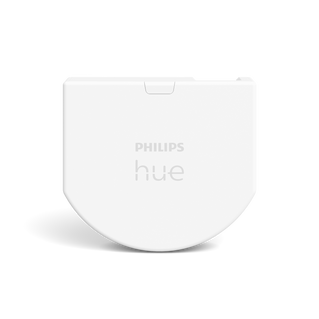
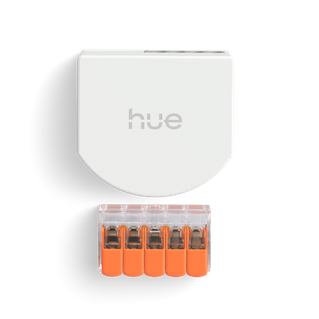
Load Requirements:
* The on/off switch module is compatible with:
· LED light sources (up to 400W)
· Incandescent lamps (up to 6A)
· Fluorescent lamps (up to 6A)
· Electronic step-down converter for extra-low-voltage incandescent lamps (up to 6A)
And cannot be used with motors or heating installations
While the Dimmer switch module is compatible with:
· HV LED light sources (trailing-edge: 5…200W; leading-edge: 5...20W );
· Incandescent lamps/HV halogen lamps (trailing-edge: 20…200W; leading-edge: 20…150W);
· Electronic step-down converter for extra-low-voltage incandescent/halogen lamps (trailing-edge: 5…200W; leading-edge: 5…20W)
And cannot be used with fluorescent lamps / iron-core transformer with low-voltage incandescent/halogen lamps / motors or heating installations.
4. Before purchasing / installation:
- Examine the way your light switch is installed to ensure that the wired wall switch module will work with the type of light switch you have.
- For versions where a neutral wire is required for installation, we recommend you to check your junction box in advance. If you do not have a neutral wire in your wall box, in some countries, you may find another junction box in the ceiling, where neutral wire may be found.
- No neutral wire available? Then choose one of the following:
o For non‑smart bulbs: Use a wired dimmer that works with or without a neutral wire or replace the bulb with Hue smart lights
o For smart bulbs: use a battery‑powered switch or dimmer instead of a wired one.
- Ensure there is enough room in your electrical box for the wired wall switch module to fit inside.
5. Installation Tips: (for all types)
- Turn off circuit breaker
- Ensure no one restores power during installation
- Cover live wires
- Take a photo of existing wiring
- Match wiring positions as instructed in guide
- In the case a wire is inserted in the wrong terminal on the module, there is a way to disconnect the wire from the terminal. Insert a screwdriver in the slot and push slightly to release the wire.
- Electrical devices should only be installed and connected by electrically skilled people. Local regulations may prohibit working on electrical wires without a professional. Consult your local authorities or an electrician for guidance.
- Start the Hue app to scan the QR code — this can be found on the product and in the manual. Then follow the guidance there to onboard. A how-to video showing step-by-step installation can also be accessed there. After the wired installation is complete, you may go back to the Hue app and continue the configuration.
6. Which Product Should You Choose?
Choose wired wall switch module if:
- You use Hue and other Zigbee smart lights
- You prefer a hardwired permanent installation, without the need to replace a battery in the future
Choose battery-powered wall switch module if:
- You use Hue and other Zigbee smart lights
- You do not have a neutral wire
- You want a simpler installation
Choose wired switch (On/Off or Dimmer) if:
- You use non-smart lights and want to make your existing lights and switches smart
- You want Matter support or Bluetooth backup
- You want to control smart lights and non-smart lights together seamlessly in the Hue ecosystem, via a single app
7. Troubleshooting
If the device is unreachable or not working:
- Verify installation steps
- Ensure breaker was turned off before wiring, and it is on again after installation is finished
- Confirm wires are fully seated in connectors
- Check button activity in the Hue app:
Look in the assigned room or under Settings > Devices > Switches. If button presses aren’t shown, there may be a wireless connection issue. - Check third‑party integrations:
Make sure no third‑party apps or partner integrations are overriding your Hue settings. - Reset the device in the app:
Reset the device to reconfigure it without fully recommissioning. - Remove and re‑add the switch:
Delete the device from the Hue Bridge, then add it again and set it up as usual. - Confirm the switch type:
Ensure the device is set up as the correct switch type (rocker or push button). If not, delete it and re‑add it with the correct setting.
Battery module only
- Low battery alerts appear in the Hue app
- Accidental wire contact may cause blinking — normal during installation
Wired switch only
- Flickering lights → check bulb type, load requirements, and compatibility
If you have any further questions, please contact our customer support team.